Updated
Updated What changed on
- Replaced the ranking-and-citation relationship with Ahrefs' March 2026 study of 863,000 SERPs. The share of AI Overview citations that also rank in Google's top 10 has fallen from 76% to 38% in eight months.
- Added the cross-platform overlap figure: only about 12% of links cited by ChatGPT, Gemini and Copilot rank in Google's top 10 for the same prompt.
Why is my site not in AI Overviews? Five common reasons.
The 30-second answer
Citation is a retrieval problem on top of ranking, not a stronger version of ranking. Five things explain almost every absence, in the order they bite: Google-Extended is silently blocked, your direct answer is buried below the first viewport, the page does not cover the sub-questions Google fans out from the main query, the content has no original data or specific numbers worth extracting, or your authority signals are weak. Rank still helps but it no longer carries the result on its own - Ahrefs measured top-10 page citation share dropping from 76% in July 2025 to 38% in its March 2026 update. If the thin pages were published in bulk by a tool or an agency, that is a different job from a single-page rewrite: see AI content cleanup.
Why ranking no longer guarantees a citation
of pages cited in Google AI Overviews also rank in the top 10 for that query.
How it was measured: 863,000 keyword SERPs and 4 million AI Overview URLs. Ahrefs measures the top 10 as blocks, counting ads, featured snippets and video packs as separate blocks.
was the same measurement in July 2025, so the overlap between ranking and being cited has roughly halved in eight months.
How it was measured: 1.9 million citations from 1 million AI Overviews. Ahrefs notes it improved its parsing between this study and the 2026 update, so part of the change may be measurement rather than behaviour.
of links cited by ChatGPT, Gemini and Copilot appear in Google's top 10 for the same prompt. Perplexity is the outlier at closer to one in three.
How it was measured: 15,000 prompts. This is 2025 data and has not been re-run, so treat it as directional rather than current.
Before the five reasons: AI Mode and AI Overviews are not the same surface
This catches a lot of people. AI Overviews are the boxed summary at the top of standard Google results. AI Mode is the full chat experience inside Google Search itself. Ahrefs ran 730,000 responses through both and found only 13.7% citation overlap. Different retrieval pools, different freshness weights, different prompts behind the scenes. If you are auditing why "AI Overviews ignore me", check both surfaces before assuming the same cause. Most of this page is about Overviews, but reasons 2-4 below apply to Mode too.
AI Overviews
Boxed summary on the standard SERP. Usually 3-7 citations, mostly from top-10 pages but increasingly from positions 11-100. Triggers on informational and complex queries. UK rollout still uneven.
AI Mode
Conversational, multi-turn experience inside Google Search. Citation pool is wider, freshness bias is stronger, source overlap with AIO is only 13.7%. Optimising for one does not buy you the other.
The five reasons, ordered by how often they are the actual problem
1Google-Extended is silently blocked
The most common single fix and the cheapest. Cloudflare's default settings, a stale robots.txt rule, a security plugin update or a privacy-led recommendation can quietly disallow Google-Extended. Blocking it removes you from AIO citation eligibility without affecting traditional rankings, so it goes unnoticed for months. Diagnostic: test your robots.txt against the AI bot list. The fix is one line in robots.txt and the change shows within days. Google's own AI features documentation confirms Google-Extended is the citation control token.
2The direct answer is buried below the first viewport
This is the lever the 2026 evidence actually points at. The CXL 100-page citation study found 55% of AIO citations are pulled from the top 30% of the source page. If your answer sits under a long brand intro, a video embed and three paragraphs of context, the extractor goes elsewhere. Restructure so the page opens with a 30-60 word direct answer to the head question, then expands below. The structure you are reading on this page (30-second answer block, then a flowchart, then the reasons) is the same pattern.
3The page only covers the head query, not the fan-out
When a query triggers an AIO, Google does not just retrieve for the literal phrase. It decomposes the question into sub-queries (the "query fan-out"), runs each, scores candidate paragraphs across all of them, then assembles the answer. A 600-word page that answers the head question and stops gets passed over for a 1,600-word page that also answers the three obvious follow-ups. Search Engine Land frames this as "relevance engineering" - building for the fan-out, not the head. Practical test: type your target query into AnswerThePublic or look at Google's "People also ask"; the questions there are your fan-out, and your page should cover at least the top four.
4The page has no original data or specific number
This is the "information gain" lever and it is underrated. AI Overviews synthesise from multiple sources and actively avoid redundancy - if your page repeats the same three statistics every competitor uses, the extractor has no marginal reason to pick you over them. The fix is small: include one number, one count, one date or one quote nobody else has. A line like "we audited 312 client robots.txt files in 2025 and 41% silently blocked Google-Extended" makes the page extractable in a way that "many sites accidentally block Google-Extended" never will. Freshness compounds this - Seer Interactive found AI-cited URLs are 393 days newer on average than organic top-10 results.
5Authority and E-E-A-T signals are not visible on the page
Lowest-priority fix on this list but the one most consultants chase first. AIO weights author bylines, Person schema, Organization signals and external citations - but it weights them after reasons 1-4. A page with a clear author bio, named expertise and a link to a Wikipedia or LinkedIn entity carries more citation weight than the same words with no byline. Schema is hygiene here, not a lever: the Ahrefs schema experiment (1,885 already-ranking pages, May 2026) showed adding JSON-LD to pages that ranked but were not cited produced no measurable lift. Ship FAQ and Article schema because Google uses them for extraction confidence, then stop expecting them to outweigh real content depth.
The order to fix in
- Day one: confirm Google-Extended is not blocked. Test here.
- Week one: rewrite the top 3 pages so the direct answer is in the first 300 words.
- Week two: for each, add 4-6 sub-questions from People Also Ask. Each sub-question gets a one-sentence answer first, then detail.
- Month one: add one specific original number per page (audit count, percentage, dated example).
- Quarter one: ship FAQ + Article schema, add named author bios with Person schema, link to authoritative entity records (Wikipedia, Wikidata, LinkedIn).
- Ongoing: rerun the diagnostic monthly on your top 10 priority queries.
Honest framing: some queries will not trigger an AI Overview no matter what you do. Heavy commercial intent, navigational queries, sensitive verticals (health, finance, legal in some jurisdictions) skip the AIO entirely or trigger it inconsistently. Before spending months optimising for a query, check whether it reliably triggers an AIO in your country. If it does not, work on the queries that do.
Primary sources behind this page
- Search Engine Journal - top-10 citation share dropped from 76% to 38% (Ahrefs data, March 2026)
- Ahrefs - AI Mode vs AI Overviews 13.7% citation overlap (730,000-response study)
- CXL - where AI Overviews cite from, 100-page study (55% top-30% finding)
- Seer Interactive - AI citation recency study (393-day freshness gap)
- Ahrefs - schema controlled test, May 2026 (1,885 pages, no movement)
- Search Engine Land - relevance engineering and query fan-out
- Google Search Central - AI features and your website (Google-Extended documentation)
More on AI Overviews diagnosis.
If I rank well in Google, why am I still not in the AI Overview?
Because AIO is a retrieval problem on top of ranking, not a stronger version of ranking. Ahrefs measured AIO citation overlap with top-10 organic pages dropping from 76% in July 2025 to 38% in its March 2026 update. The query is fanned out into sub-questions, candidate pages are scored on extractability and information gain, then a subset is cited. Rank still helps, but it no longer carries the result on its own.
What is the difference between Google AI Mode and AI Overviews?
AI Overviews are the boxed summary at the top of the standard results page. AI Mode is the full chat-style experience inside Google Search. Ahrefs analysed 730,000 responses across both and found only 13.7% citation overlap. Different retrieval pools, different freshness weights, different prompts. Optimising for one does not buy you the other.
How fast does the answer have to appear on my page?
Fast. The CXL 100-page citation study found 55% of AIO citations come from the top 30% of the source page. If your answer sits below a long brand intro and three paragraphs of marketing prose, it is structurally hard to cite. Lead with a direct 30-60 word answer in the first viewport, then expand below.
Does schema actually move AI Overview citation rates?
Mixed evidence. Cross-sectional data shows cited pages are 2-3x more likely to carry JSON-LD, but the Ahrefs schema experiment (1,885 already-ranking pages, May 2026) produced no measurable citation lift. Treat schema as hygiene quality sites have anyway, not a standalone lever. Ship FAQ and Article schema, then move on.
How quickly should I expect to see citations after fixing the issues?
Robots.txt and schema changes typically register inside a week. Rewriting a thin page so the answer is in the top 30%, adding fan-out sub-questions and inserting an original number takes a quarter to fully re-evaluate as Google re-crawls. Citation patterns move quicker than blue-link rankings but slower than ad spend. Seer Interactive measured AI-cited URLs as 393 days newer on average than the same query's organic top-10, so freshness compounds on top of the other fixes.
Why does my competitor get cited but I do not?
Usually one of five things: their answer is in the top 30% of the page, they cover the sub-questions Google fans out from the head query, they have at least one piece of original data or specific number, they have a named expert author with structural credibility, or they are not silently blocking Google-Extended. Walk the diagnostic on this page in order; the first no is almost always the fix.
Is there a tool that tells me which AIO citations I am missing?
Profound, AIClicks, Otterly.AI and Goodie all track AIO citations specifically. For a one-off baseline, run my AIO visibility checker. Ongoing monitoring needs a paid tracker.
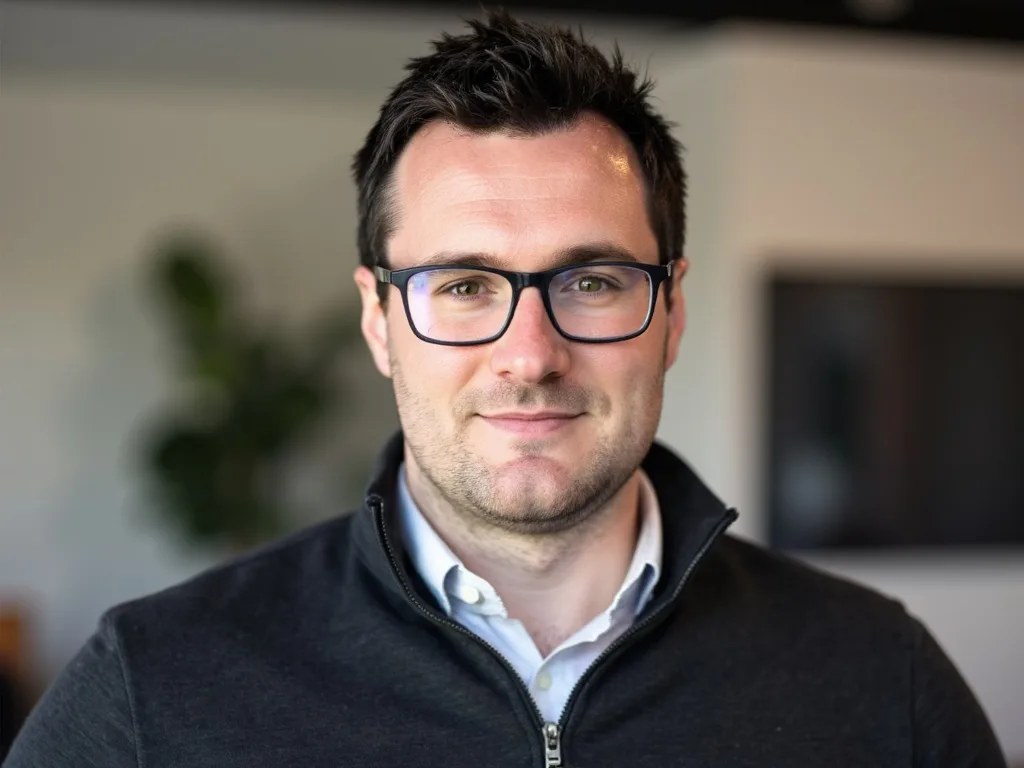
Jason Burns
Independent UK SEO, GEO and AI consultant. 17 years in search. Portfolio includes 3M, BlackRock, Unilever and E.ON. Owner of SEO Moves Ltd since 2014.
More about Jason →Want me to run the diagnostic on your site?
Send one query that should be triggering an AIO in your category but is not citing you. I run the five-reason diagnostic live on a 30-minute call and tell you which one is yours.
Book the diagnostic